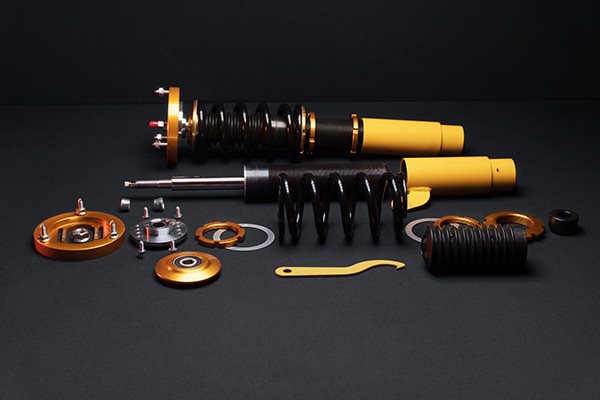
If your car keeps bouncing after a bump or dives noticeably under braking, worn shocks or struts may be the cause. Because the decline usually happens gradually, drivers often get used to the change. The vehicle still moves, but its suspension no longer controls wheel and body movement as well as intended.
Leaving weak dampers in service affects comfort, tire wear, and how confidently the car responds during sudden maneuvers. An inspection helps distinguish worn dampers from other suspension problems.
Shocks and Struts Control Suspension Movement
Coil springs support vehicle weight and allow the wheels to move over uneven pavement. Shocks and struts slow that movement so the tires settle quickly after each bump. A shock absorber is a separate unit on many vehicles, while a strut often serves as part of the suspension's structural support. Both use damping components that gradually wear and lose effectiveness.
As damping fades, the body often keeps bouncing, pitches forward under braking, or rocks through turns. Not every vehicle uses the same suspension design, so the correct inspection depends on the model. We check for fluid leakage, mounting wear, damaged components, and abnormal movement. A quick visual check won't reveal every weak damper, especially when performance declines without a large fluid leak.
Tire Contact Becomes Less Consistent Over Bumps
Tires need predictable contact with the pavement to steer and brake effectively. Weak dampers allow the wheel to oscillate longer after road impacts, making the contact load less stable. You notice more movement on rough roads or a floating sensation at highway speed. That extra body movement feels especially unsettling during quick steering corrections, even if nothing seems loose while parked.
Low tire pressure, damaged springs, and worn bushings create symptoms similar to weak dampers. Your tire condition and the way the vehicle handles help separate them. A damaged shock doesn't automatically mean the tire will leave the road, but reduced control is a good reason for repair. Proper suspension maintenance helps the vehicle respond as expected when road conditions change suddenly.
Uneven Tire Wear Can Increase Repair Costs
Poor damping sometimes contributes to irregular tread wear, including cupping or scalloped patterns. The tire repeatedly loads and unloads as the wheel bounces, causing uneven tread wear. Incorrect alignment, wheel balance, or other suspension faults can create similar patterns, so the tire alone doesn't identify the cause. Once tread wear becomes severe, new dampers won't restore the lost rubber.
Uneven tire wear calls for a suspension inspection and alignment measurements where needed. New tires alone won't correct the movement that wore out the old set. Did the vehicle begin bouncing before the tire noise appeared? The order in which symptoms appeared helps explain which component deteriorated first.
Replacing tires without correcting a worn damper or loose joint can lead to another set wearing prematurely, turning a manageable maintenance issue into a larger expense.
Stopping and Cornering Feel Less Controlled
Weak dampers often let the body pitch more under braking and lean longer through turns. That extra movement makes precise steering corrections harder on rough or slippery roads. Braking distance changes depend on road surface, tires, and vehicle design, but poor suspension control is never a benefit. You sometimes feel the front end dive even when the brakes themselves still work properly.
A brake inspection is still needed if the pedal feels abnormal or the car pulls while slowing. Not every handling change comes from worn struts. A full-vehicle check prevents unrelated parts from being replaced while the original symptom remains.
Steering joints, bushings, tires, and brakes all affect stability. Correcting the worn part returns the suspension toward its intended operation, giving you a more predictable response.
Mounts and Other Components May Wear Alongside Dampers
Strut mounts, bump stops, dust boots, springs, and bushings work with the damper assembly. A worn upper mount often clunks when you steer or cross a bump. Damaged boots allow dirt to reach exposed components, while a collapsed bump stop permits harsh contact at the end of travel. Installing a fresh strut without checking the related mounts and bushings often leaves the noise unresolved.
We inspect the condition of the surrounding hardware and explain which components need service together. Some vehicles require alignment after strut replacement because the repair changes suspension geometry. Proper torque and installation at the specified positions protect the new assembly. The goal is to fully correct the original complaint without replacing unrelated suspension parts.
Signs the Vehicle Has Been Waiting Too Long
A gradual change in ride quality is easy to overlook until the car feels very different during a hard stop or sharp turn. Repeated bouncing, new knocking, uneven tire wear, and increased body motion call for inspection. A major impact or visible suspension damage changes the urgency and may make normal driving unsafe.
Report any of these symptoms:
- Continued bouncing after a speed bump
- Front-end dive during ordinary braking
- Excessive body lean through turns
- Uneven or scalloped tire tread
- Fluid on the shock or strut body
- Clunks from a suspension mounting point
These observations help narrow the inspection and identify related safety concerns. Severe handling instability calls for prompt service before another highway drive.
Restore Ride Control Before New Tires Wear Out
Weak dampers don't recover on their own. Over time, tire wear and handling problems usually become more noticeable. The damper's condition, the remaining suspension wear, and your driving symptoms determine when replacement makes sense. There isn't one universal mileage limit. Road conditions and vehicle loading affect how quickly components wear.
After repair, a road test checks the ride response, steering stability, and original noises. Regular suspension maintenance and timely inspection can reduce repeated tire costs and preserve more predictable handling. Replacing worn dampers is about controlling the vehicle as it moves, not simply making the ride feel softer.
Get Shock and Strut Inspection Across Virginia With Chahel Automotive
Chahel Automotive serves drivers through five locations across Virginia with suspension inspections, shock and strut repairs, and tire wear evaluations. You'll learn which components are changing the ride and which repairs are justified.
Call Chahel Automotive about your ride concern, or book a suspension inspection online.