Posted on 10/30/2026
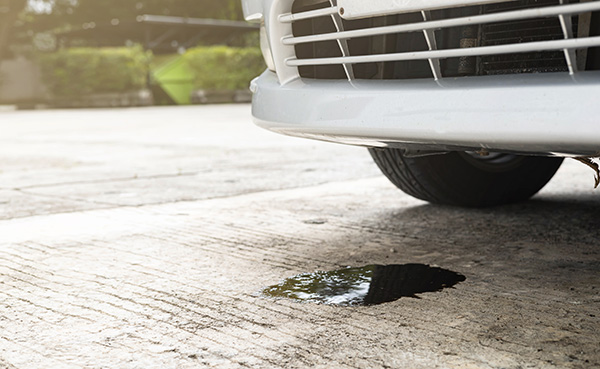
A few oil spots beneath the car are easy to postpone when you're staying close to home. A road trip changes the calculation. The engine will run longer, reach full temperature, and spend more time away from a familiar repair shop. The size of the puddle doesn't tell the whole story. Oil can collect on a shield, spread along engine surfaces, or land on a hot component without leaving much on the ground. Before leaving, have the source and rate of the leak checked. At Chahel Automotive, we can review the condition and explain whether the car needs repair before the trip. Why a Small Oil Spot Gives an Incomplete Picture A parked-car drip shows where some oil ended up, not necessarily where the leak began. Air moving beneath the vehicle carries oil along surfaces while driving. Underbody panels also collect it before it reaches the pavement. A leak that slows when the engine stops behaves differently from one active under running pressure. Long ... read more
Posted on 9/25/2026
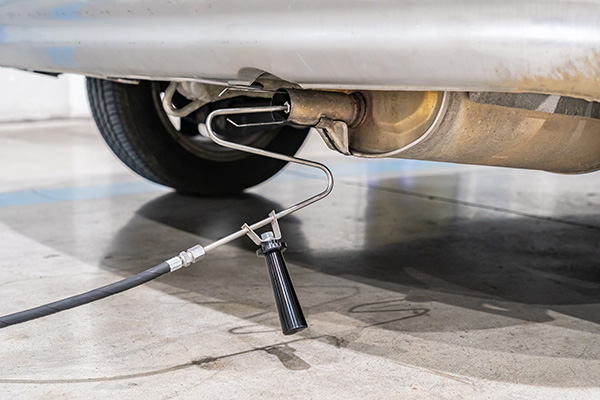
An exhaust leak rarely sounds the same from every seat in the car. A sharp ticking noise near the firewall can seem like it is coming from underneath. A deeper leak under the floor may echo through the body and sound farther forward than it really is. Once the windows are up and road noise joins in, locating it by ear gets even harder. The timing of the noise usually gives us better information than volume alone. A leak that is loudest during a cold start points us in a different direction than one that gets worse with vehicle speed or only shows up under acceleration. Where you smell exhaust matters too, especially if fumes are reaching the cabin. Engine Bay Leaks Tend to Sound Sharper Leaks near the engine often come from an exhaust manifold, manifold gasket, cracked flange, turbo connection on turbocharged vehicles, or the first section of exhaust pipe. Because exhaust pressure is still high in this area, the sound is commonly a tick, puff, or tapping noise that ... read more
Posted on 8/28/2026
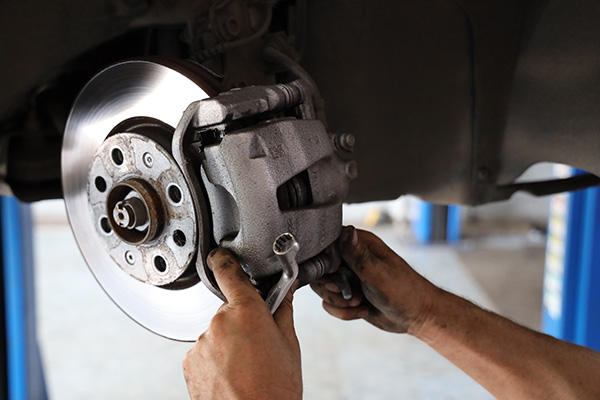
A warning light can appear while the vehicle still seems completely normal from behind the wheel. The brake pedal feels familiar, the engine runs as expected, and nothing obvious changes during an ordinary trip around town. Then an ABS light, traction-control warning, or stability-control message suddenly appears on the dashboard. Those warnings can trace back to information coming from one of the wheels. Modern vehicles constantly compare wheel speeds while you drive, and several safety systems depend on that information. When one signal disappears or becomes unreliable, the effects can extend beyond the sensor at that wheel. What an ABS Wheel Speed Sensor Measures Each wheel speed sensor monitors how quickly its wheel is rotating and sends that information to the ABS control unit. Depending on the design, the sensor reads a toothed reluctor ring or a magnetic encoder incorporated into the wheel bearing or hub assembly. HELLA notes that wheel speed information is used by ABS, tract ... read more
Posted on 7/31/2026

There is a distinct magic to a long-distance road trip. You’ve got your favorite music queued up, the cooler is packed with snacks, and the destination is waiting at the end of a long stretch of highway. But as mechanics, we look at road trips a little differently. We don't just see scenery; we see sustained high speeds, heavy cargo loads, and hours of continuous heat cycling under the hood. At our shop, we love a good adventure as much as anyone, but we’ve also seen too many vacations derailed by a tow truck. A breakdown on your daily commute is an annoyance; a breakdown three states away in a town you can't find on a map can completely ruin a family holiday. Fortunately, most roadside disasters are completely preventable. Before you turn the key and shift into drive, here is how you can ensure your car is as ready for the journey as you are. Systems to Inspect Before You Leave When your vehicle is running at highway speeds for hours at a time ... read more
Posted on 6/26/2026

A brake pedal should feel firm, predictable, and reassuring. When it doesn’t, drivers notice right away. If your brakes feel soft, squishy, or as the pedal sinks farther than it used to, that’s what most people mean when they say the brakes feel spongy. At our shop, we take that complaint seriously every time. Spongy brakes are not just an annoyance or a weird pedal feel you should learn to live with. They usually mean something is affecting the hydraulic pressure in the braking system, and that can reduce how confidently and safely your car stops. The good news is that there are a few common reasons this happens, and most of them can be found with a proper inspection. The important thing is not waiting too long and hoping it goes away. What “Spongy” Usually Feels Like Drivers describe spongy brakes in a few different ways. Sometimes the pedal feels softer than normal. Sometimes it goes lower toward the floor before the car starts slowing do ... read more