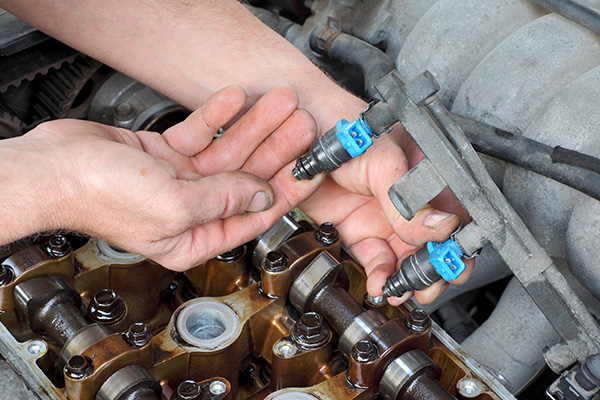
Fuel injectors work quietly in the background, delivering a precise spray of fuel into the engine thousands of times per minute. When they start to get dirty or clogged, the change is not always dramatic at first. Instead, you get a collection of small symptoms that slowly chip away at power, smoothness, and fuel economy until the car just does not feel right anymore.
What Fuel Injectors Are Supposed to Do
Injectors are designed to deliver the right amount of fuel in a fine, even mist at exactly the right moment. That spray pattern is what helps the engine burn fuel cleanly and efficiently. Modern systems are very sensitive, so even a slight restriction or uneven spray can throw off the mixture in that cylinder.
Over time, tiny deposits from fuel, heat, and carbon can build up on the injector tips. Instead of a crisp cone of mist, the injector may dribble, spray unevenly, or not deliver enough fuel. When that happens, the computer is constantly trying to compensate, and you start to feel the difference while driving.
Common Driveability Symptoms of Dirty Injectors
Dirty or partially clogged injectors often create a set of familiar complaints. You might notice:
- Rough idle, especially once the engine is warm
- Hesitation or stumbling when you pull away from a stop
- A soft “flat” feeling when you accelerate onto the highway
- Occasional misfires or a light shudder under load
Sometimes these symptoms come and go, which makes them easy to ignore at first. As deposits grow, they usually become more consistent. When we test-drive a vehicle with suspected injector issues, we pay close attention to how it behaves at light throttle and under moderate acceleration, not just at full power.
Fuel Economy Changes and Exhaust Clues
Clogged injectors can affect fuel economy in either direction. If an injector is restricted and the engine is running lean in that cylinder, the computer may try to correct it by adding more fuel overall. In other cases, poor atomization wastes fuel that does not burn efficiently. Either way, you may start to notice you are filling up more often without any change in driving habits.
The exhaust can offer clues as well. A slightly rich condition from poor injector control can leave a stronger fuel smell at the tailpipe, especially on cold starts. In more severe cases, you may see darker exhaust or feel a rough, rhythmic misfire that lines up with one cylinder not getting the right fuel delivery.
Starting Problems and Cold-Running Issues
Fuel injector problems often show themselves during cold starts first. When the engine is cold, it needs a carefully enriched mixture to light off and stay running. If one or more injectors are not flowing correctly, the engine may crank longer than normal, stumble for the first few seconds, or stall right after starting.
You might also notice that the engine feels uneven or surges slightly until it warms up. Once everything is hot and clearances tighten, the symptoms can fade, which is why some drivers think the issue fixed itself. In reality, the cold-start struggle is your early warning that fuel delivery is not as clean as it should be.
Check Engine Lights and Codes Linked to Injectors
Modern vehicles are quick to complain when fuel delivery is off. Dirty injectors can set a range of codes, including cylinder-specific misfire codes, lean or rich condition codes, and sometimes injector circuit codes if there is an electrical side issue along with the restriction.
A common pattern we see is a repeating misfire code on one cylinder that has good compression and spark but a suspicious fuel trim pattern. That is when we start focusing on injector flow. Simply clearing the code without addressing the cause usually means the light will be back, often at the worst time.
Owner Habits That Can Contribute to Dirty Injectors
You cannot control everything that happens inside an injector, but a few habits make a difference. Constantly running the tank very low can stir up more debris in the system and keep the pump and injectors hotter than they need to be. Very short trips that never let the engine and fuel system fully warm up can also promote more deposit buildup.
Using poor quality fuel or skipping recommended fuel system maintenance for many years does not help either. We are not talking about miracle additives in every tank, but following realistic service intervals and using decent fuel goes a long way. When we talk with drivers about injector problems, we often see a pattern of long periods with no fuel-related maintenance at all.
How a Technician Confirms Fuel Injector Problems
From our side, guessing is not good enough. We look at fuel trims, misfire data, and live sensor readings, then combine that with how the car feels on the road. In some cases, professional injector cleaning can restore proper spray and flow. In others, a weak or completely clogged injector needs to be replaced.
We also make sure to rule out issues that mimic dirty injectors, like ignition problems, vacuum leaks, or low fuel pressure from a weak pump or clogged filter. Once we are confident the injectors are the root cause, we can recommend the most sensible repair instead of throwing parts at the problem.
Get Fuel Injector Cleaning and Diagnosis in Virginia with Chahel Automotive
If your engine has been idling rough, hesitating on acceleration, or setting repeat misfire and fuel trim codes, your injectors may be trying to tell you something. We can test your fuel system, pinpoint whether dirty or clogged injectors are part of the problem, and recommend cleaning or replacement where it makes sense.
Schedule fuel injector cleaning and diagnosis in Virginia with Chahel Automotive, and we will help your engine run smoother, cleaner, and more efficiently again.
- 2084 Chain Bridge Rd, Vienna, VA 22182
- 102 Maple Ave W, Vienna, VA 22180
- 2961 Hunter Mill Rd, Oakton, VA 22124
- 12080 Glade Dr, Reston, VA 20191
- 545 Maple Ave W, Vienna, VA 22180